Redefining Growth: Inside the Mind of The Ghetto Alchemist
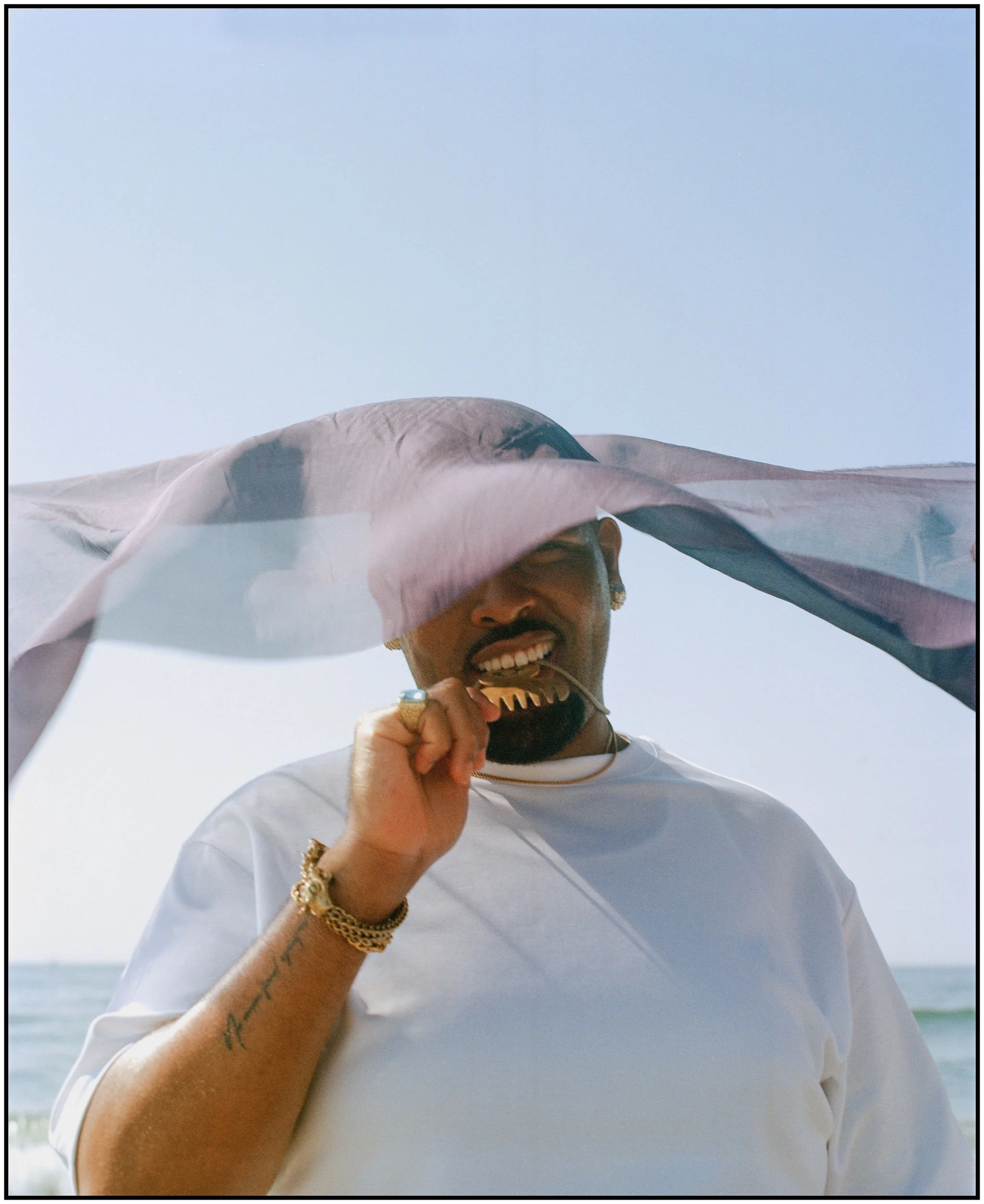
Creative Director: Kojo
Stylist: Jazzmine Williams
Photographer: Sebastian Alexander Bass
Chris Melville: What do you feel like most changed about you? You know, not just as an artist, but as a person. We interviewed you back in 2024.
Maleek Rae: Since then, artistically, a lot of doors have opened up, a lot of opportunities have presented themselves, and I've seized opportunities. I feel like back in 2024, I was knocking on the door. Now in 2026, people acknowledge me as an emerging artist. So it's cool to be received.
As a person, I'm somebody who is learning about balance more and more every day. When you're first breaking through, you have no choice but to do a hundred things a day. Nobody knows how it's getting done, but somehow it's getting done. There are still a hundred things that have to get done, but I have to put more energy into how I'm able to show up.
Chris Melville: Do you feel now that your foot is in the door, you have a name and a capacity to grow as an artist, or are you still fleshing out ideas you've had from the past?
Maleek Rae: I feel like it's a place that's in the in-between. Back in 2023, I had been working in the arts industry for five years. I graduated from SUNY Purchase in 2018, but that was solely working as an actor. 2023 was the emergence of me as a music artist, as a playwright, as a multi-hyphenate. I came into it already having these fine-tuned skills from training as actors that I'm able to apply to everything. I bring authenticity and fire, but the rooms are changing. Sometimes the runs have stakes. Sometimes it's like, okay, these are good moments that I've been working for, and I want to show up in a way that requires rest.
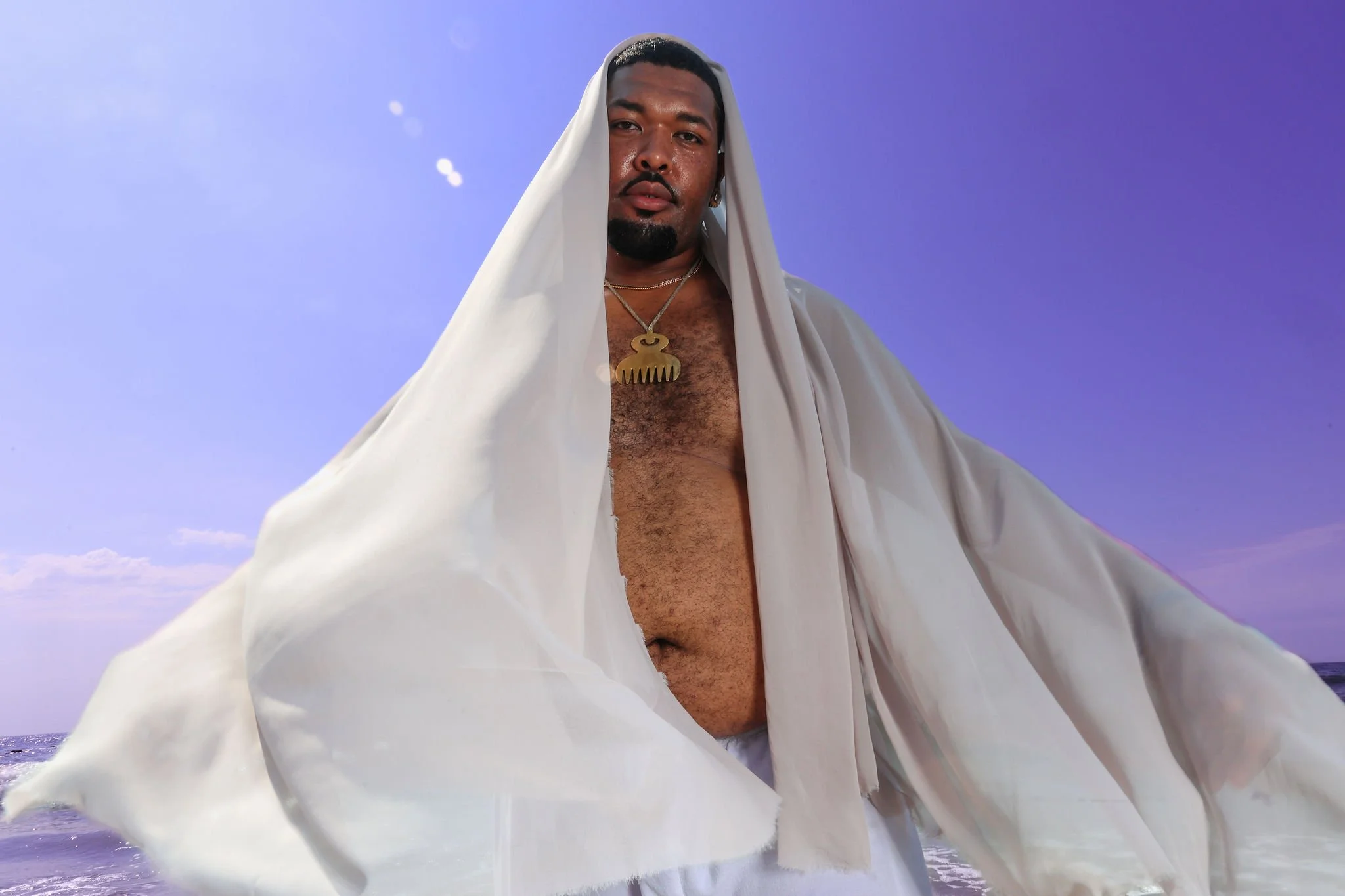
You got to nurture yourself! You can't pour from an empty cup, and that's something that I share with a lot of my friends and people in the space, and it's hard.
Whenever anybody is starting off anything, everything is based in the “I.” It's a declaration of self. I feel like so much of that was happening in that 2022 to 2024 time period—like, what am I doing with my artist voice? I had limited my artistic voice to everyone else for the foundation of my career as an artist. It was always about how I come into other people's visions, how I voice these characters and bring life to them. So that three-year era from 2022 to 2025 was really me seeing: what am I here to do?
The artistic offering that changed a lot for me was a song called “Clear the Path,” which I wrote in December of 2024. I've been sharing it with people for the past year and a half inside of my trilogy play series called Gutta. It's not the opening of the trilogy series, but that song changed the game for me. Even though acting was my introduction, I have a voice that exists outside of other people's words. I have an offering as a performer that is attached to me crafting words, which connects me to the writer. When I write, music is just naturally what comes out of me. It's not something I have to force or overthink; it is as natural as my breath.
As an artist, I'm not trying to catch the hottest moment. I've been a vessel in other people's world-building, so I don't have fear of people seeing me in process. I know what it looks like in rehearsals when you're going, "How the hell is this gonna come together?" But then I know what it's like when you get off stage, look at everybody, and watch—oh my goodness, we made that happen. The trust needed to truly be in process is something I learned from my training and background as a performer: performing in churches, on the street, in theater, on camera, in video games, and in commercials across all types of venues and people. So when it translates to my world-building, it expands how I look at the world.
Chris Melville: In this era of social media, views, and attention, people want to see the final product rather than the process. But the process is most impactful, right?
Maleek Rae: Yeah, in the process is the thing.
When we look at a world where people are so interested in what can artificially be built, you barely ever see people use artificial supplements in order to create process-based experiences.
Artificial supplements always have to do with getting to a product because it's so aesthetic-based. Everything is based down to: I want to say this, I want it to look like this, make it happen.
So there is an art form to being in that nitty-gritty middle place where you sit down, scratch your head, and wonder how this is going to happen. It’s the reason why people see I Love Boosters and go, "Oh my goodness, this is so interesting,"because you're seeing somebody be inventive in process, not just focusing on wrapping up a product because everything is so microwavable.
So I'm always looking where everybody else isn't looking. What is the space like? It's a game so many of us played as kids, or when you're doing theater, where you just have to feel the room. If you see gaps in the room, you go to the gaps to balance the room as much as possible. That was always one of my favorite games to play, and I carry that within my practice now. I'm always asking: Where are the gaps, and where can I position myself inside the gap instead of trying to go to what looks like the hottest place where everybody wants to be?
Chris Melville: You’re in New York, but I see in your background you’re from Detroit. Did you grow up there, and at what point did you move to the city?
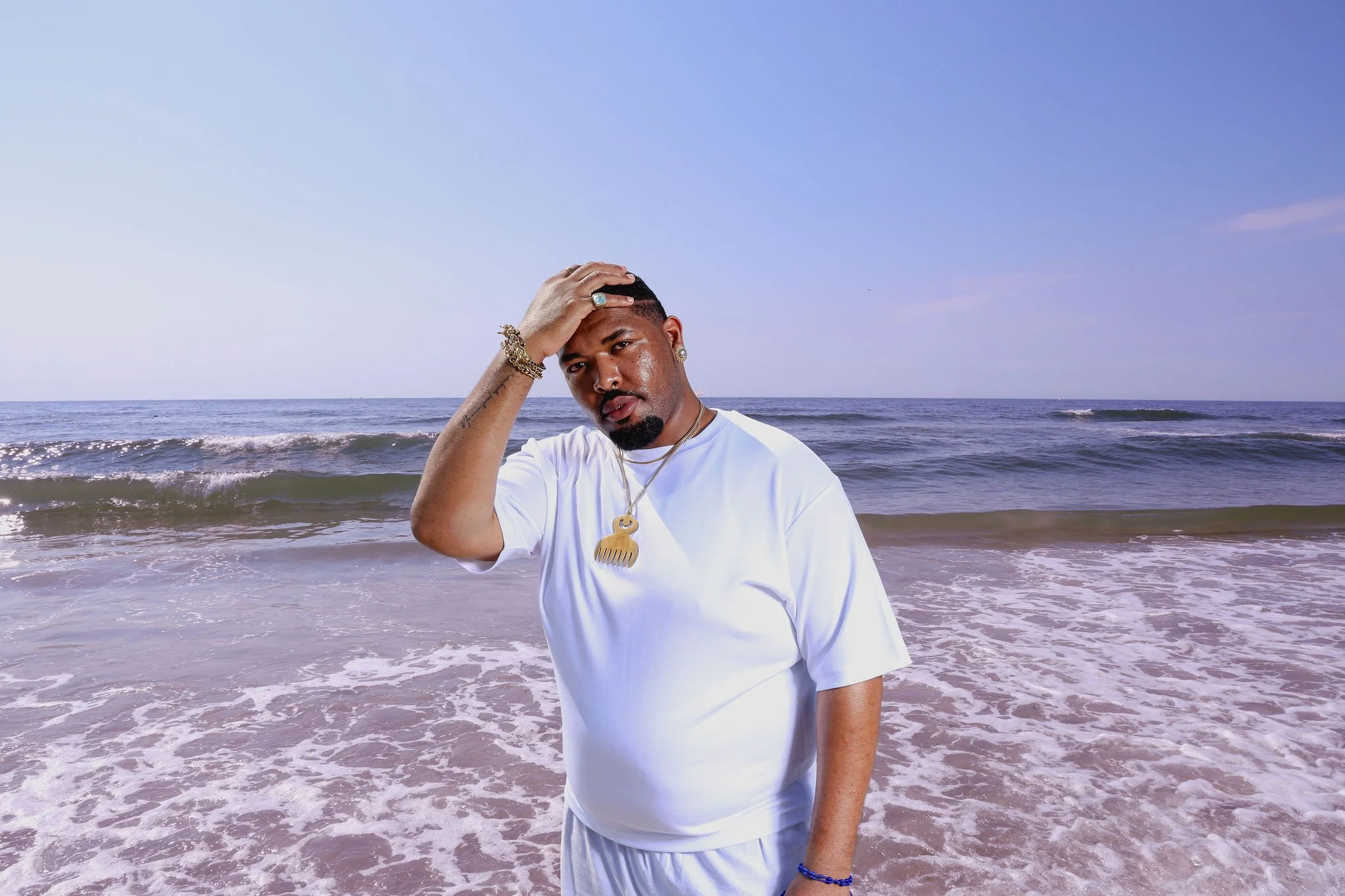
Maleek Rae: I am born and raised on the east side of Detroit, Michigan. I didn't come to New York for the first time until I was 17 years old when I came to see SUNY Purchase. I lived in Detroit my entire life, except for living in a suburb called Belleville for a year or two because my house burned down when I was in 2nd grade. I sort of had stable housing for a year, busing back and forth, and then we moved to the suburbs. Out in the suburbs, I was like, "I miss the city." So we slowly started to transition back.
Our introduction to artistry in a more formal sense was at Cass Technical High School under the administration of Marilyn G. McCormick, who we refer to as MC. She's a Tony Award-winning acting teacher, but saying acting teacher feels like a small chunk of what she does—she's really a woman who saved a whole bunch of us. I look around at my classmates who came from tough neighborhoods and places, and now every single time I turn on TV, I'm seeing one of my friends. One's on Broadway, one's dancing with Megan Thee Stallion. It used to be all these kids who had a t-shirt that told us “Dare to Dream,” and we dared to dream. Now we're out here, so I gotta give a shoutout to the teachers who care and make the difference between our circumstances and our choices.
Chris Melville: Being in New York, how do you maintain your roots and culture, and what do you bring from Detroit as an artist in the city?
Maleek Rae: I feel so blessed that all of my best friends live here. A big chunk of us said, "We're gonna make it happen,"and we brought home to New York. We found home in each other, and every chance we get to be together, we're still there.
New York is the biggest, smallest city.
Coming from Detroit, so many people who came before us moved there with hopes of a better life—
getting that factory job for stability. When you look back at genealogy, our families who migrated to Detroit came from southern places: Little Rock, Arkansas, Louisiana, Alabama. Thinking about their migration and that "dollar and a dream," my ancestors gained freedom, went North for work, and now in my family, I'm the next generation that has to migrate to manifest a dream.
That feels Detroit, and it connects me to so many places. But the culture of Detroit—outside of being the Blackest city in America where we talk about techno, house, jitting, food, and hair—is deep.
My play trilogy is entitled Gutta, but a big part of Gutta has to do with gators. Detroit is a city where people wear alligator skins.
In my song "Clear the Path," there's a part where I say, "I'm treading on serpents, I make 'em nervous, they see who coming." I sat down one day and thought: Damn, I grew up in a city where my uncles walked around treading on serpents with alligator skins and long fur coats.You can open a box in Detroit and find a picture of somebody in a fur gown to the ground. It's just so deep in the DNA.
Chris Melville: Tell us a bit about how you identify and your identity in the arts.
Maleek Rae: Absolutely.
I am Black, queer, and genderqueer. That is how God has called for me to navigate this lifetime and navigate the earth.
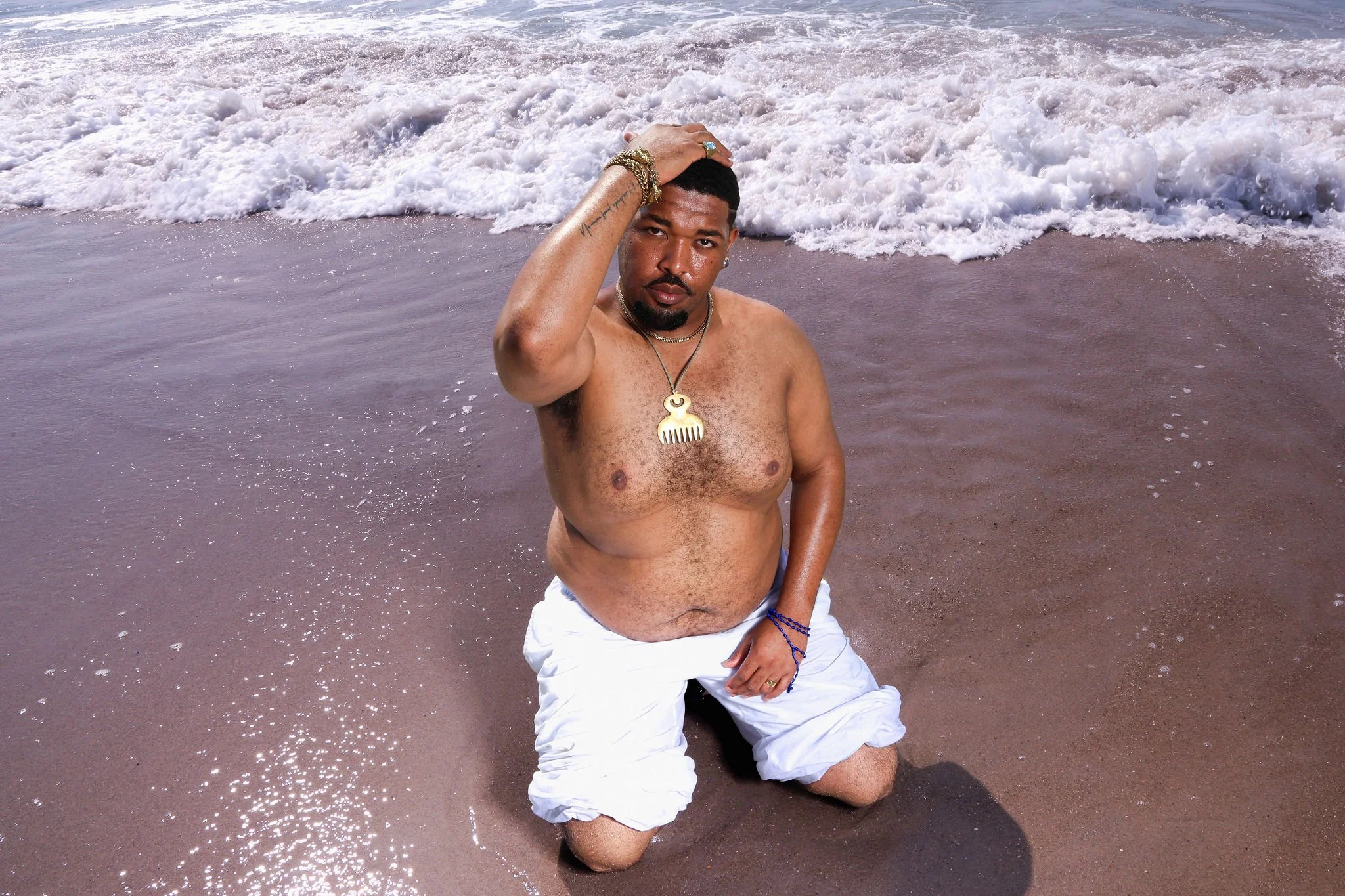
Chris Melville: Do you feel pressure in your art to defend your identity or hold a responsibility to uphold that part of yourself?
Maleek Rae: In my art, it feels like an honor. It feels like if you asked Prince Henry how it feels to carry the weight of his bloodline—it feels weighted, but it's an honor because I know I'm not the first. This is deeply ancestral and has been around since the dawn of time; people were just forced to move into the shadows and get tucked away. Now, we cannot be kept in the shadows.
I look at the work I do as an illuminating force. Luckily, I don't feel like I have to do too much defending. When people don't understand who you are, it can make a lot jump in them, but I don't put extra weight on myself due to other people's lack of awareness. I'm a genderqueer, gender-free person. But when people first read me, I know that if I'm defensive, I'll be at odds with almost everyone who lays eyes on me. I'm 6’3”, a large Black masculine-presenting person. I can have on pink lipstick and nails, and people are still gonna see a big man first. That's just the vessel I navigate this realm in.
So inside the art, it's a place of celebration, illumination, and giving a roadmap to other people. People don't see how devastating it is when you don't see reflections of yourself—especially in small towns or remote places. Artists like myself, who are hitting the pavement without the biggest followings, choose to show up to provide people with medicine rather than just sugary commercial things that get people hype. I look at my art as nurturing and nourishing folks at that intersection.
Chris Melville: Diving into your plays, tell us about Body Count. What was the hope and conversation you wanted the audience to experience with that title?
Maleek Rae:Body Count is so provocative. It’s a creation between me and my dear collaborator, Amani Meliyah. Me and Amani last collaborated on Ghetto Alchemist: A Mushroom's Survival Guide back in 2024. Shortly after finishing that, pages started coming to me. A month later, I shared them with Amani and Amani was like, "Oh my goodness, this is different." We started conversing in 2024, and in 2025, Exponential Youth Festival hit us up asking what we were working on. So we landed on Body Count, where I'm the writer and Amani is the director, co-creating these worlds.
Whenever somebody asks, "What's your body count?", I look at it as: What's your genesis? Where have you been? Biblically, people say, "I know where you come from because your speech betrays you; I hear your history by your speech." I looked at it as creating an origin story and a world for Black queer bodies to exist divine, sacred, and holy inside the Garden of Eden—not as monstrosities, but as divine vessels present from the start.
God calls Adam "Adam," and God didn't call Eve "Eve" at first—they were of the same. So with Body Count, which ran top of the year in January 2026, we wanted to craft something that made the community start the year feeling sacred. Sex does not have to be separate from that conversation or hidden in the closet before you put on church clothes or pull out sage. It’s all within the intersections.
Chris Melville: Can you share more about the Gutta trilogy?
Maleek Rae: Part One is entitled Ceremonies for Alligator Bay. The second installment is called Grandfather Taught Me How to Burn. And the finale of the trilogy is called Gator City.
We are in process, waiting to hear back about things to continue pushing. Ceremonies for Alligator Bay got early support from The Tank in NYC when I needed space to throw ideas at the wall. Since then, I've been an artist-in-residence at JACK Theater, The Cell, and I started working on Part Two right after Body Count with Hi-ARTS in Brooklyn, which is the home of the original Hip-Hop Theater Festival.
Chris Melville: What does "ceremony" mean to you, and how does it show up in your creative process?
Maleek Rae: Ceremony is an order of events where you may not know everything that's going to happen, but it feels so familiar that it's one of the only places outside your home where your body can relax into and be challenged at the same time. When we go to a funeral, a wedding, or a graduation, we know the order. We trust the process even if we don't know who's gonna cry or what frequency people are on.
For me, within the craft, ceremony is making theater that is for Black people, because so many times theater is not that experience for us.
If you don't look, sound, or hold certain degrees, theater doesn't feel like a place for you. My goal is to create theater accessible for all of us—whether you went to the Ivy League or had a dream, hit bumps, and saw things you don't want to talk about. Nobody's accolades take them too high, and nobody's failures take them too low.
Chris Melville: What sparks that creativity for you when you begin a project—the image, feeling, music, or story?
Maleek Rae: I usually get a word, because since it's the creation of ceremony, it's like a spiritual call. They start talking, and I listen.
A lot of stuff I create comes from being angry. Since I've been big my whole life—born 9 pounds, 11 ounces, 22 inches long, God bless my mother—I've always had to deal with people fearing my anger. Theater was the first place I learned how to channel that energy. Being an actor, sometimes I didn't get to share as much of my voice, but now in this creative frequency, I'm back there.
A lot of creations come from me seeing things in spaces and going, "Did you see that? What just happened?" My work is about bridge-building. Some people are called to build skyscrapers that people see for miles away; some people are called to build bridges. You cross over bridges without thinking about how many hands it took to build them, but you use the bridge constantly.
Anger is like fire, but people don't just use fire to burn things down—you use fire to neutralize soil to grow things back up. I'm not afraid to put work on paper or be the vessel forward, because my training taught me to trust the process and be the biggest advocate for my work on stage and off stage.
Chris Melville: When you don't feel in that creative space or hit a slump, what do you do to reconnect with yourself?
Maleek Rae: Being real, I'm there today. I hit that slump a lot because I pour a lot into what I do through art and as a person. Rest is so important to me. Community, getting myself in church, and cooking food to nourish myself are essential.
You can't pimp out your gift. I don't have worries about fitting into the commercial world. If I build my foundation, I will have enough to pull from when navigating that. I look at Issa Rae or Quinta Brunson and how many years they worked prior to their massive success.

The down season teaches me a lot more than the up season. When there are lots of awards, acknowledgments, and parties, it's actually hard for me to create.
I don't have reps—I represent myself. I'm the creator, producer, manager, agent, and PR. I wrote "Clear the Path" in December 2024 when I was going through some real stuff, writing a song a day. If I wasn't allowing myself to feel low, I would have never downloaded the medicine I needed. Keeping it real with God means acknowledging the highs and lows, because one is not better than the other.
Chris Melville: What kind of legacy do you hope you're building now and for the future?
Maleek Rae: In five years, the legacy for me is to see more up-and-coming queer artists supported around the divine work we do—not just when it's a spectacle, sexualized, or taboo. I want to see queer artists supported to just be in process, receiving grants, residencies, and fellowships where they can take two or three years to sit back and create without operating purely out of survival.
Because of my stature—6’3”, large, masculine-presenting—my presence gives me room that some people don't get. I see the way my trans sisters and gender-nonconforming siblings have to fight just to pay phone bills or get into teaching spaces. People push folks to the outskirts and then shame them for doing what they have to do to survive. So as I build a commercial entity, I want to create a pipeline for the next generation. I have mentors like Ncuti Gatwa—who played Uncle Clifford on P-Valley and was one of my theater teachers in high school—and keeping that lineage going is part of that legacy.
Chris Melville: Are there any upcoming projects that people should be looking out for?
Maleek Rae: Right now, I'm getting back to the roots of my production house, The Ghetto Alchemists, and doing community incubator work to bridge gaps, with things coming up late summer, fall, or winter.
I've also started wearing a new cap managing an artist named Valentina Michaela. She's a rapper, playwright, actor, and overall artist. We're cooking up fire, doing developmental consulting and artist liaison work to help bring other folks into the fold.