Kyla Divine: Pole Dancing and Divine Femininity
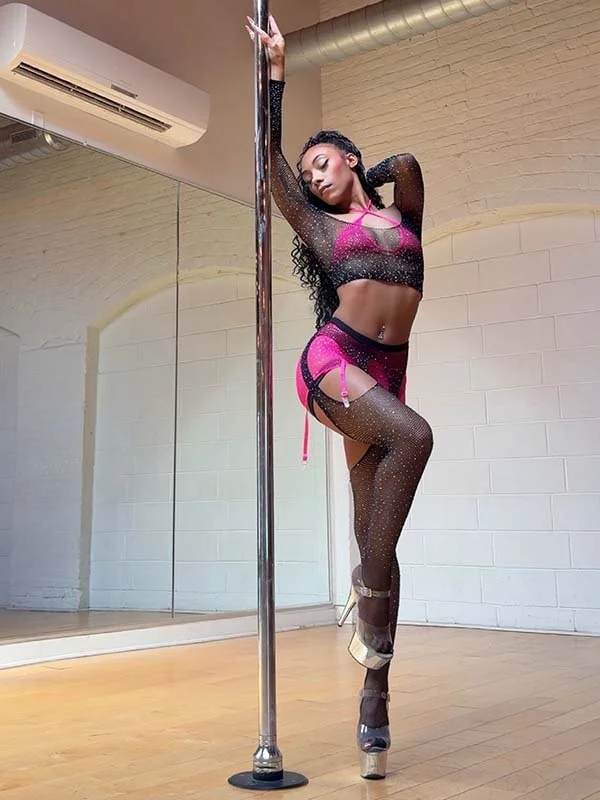
Kojo: What's your name, or do you have an artist name?
Divine: Anytime I do any type of creation, I go by Divine.
Kojo: What is your creative expression as Divine?
Divine: Divine is just that. She is divine. She is ethereal and everything that I believe femininity is in creation. It's all of my expressions. It's poetry; it's dance. She's really dance-centered, but really everything comes together to create my persona of Divine.
Kojo: Would you consider Divine as an alter ego?
Divine: I would, it's in the work that I'm in. I think it's healthy to be able to compartmentalize your head in those ways because I do different things in the world.
Kojo: Can you share what those things are?
Divine:. I work in the club scene as an exotic dancer. That's the Divine side of it. As Kyla, I'm a nanny, I work in the nonprofit sphere, I own a business—I own a vintage clothing business—and I make custom jewelry. The creation is through everything that I do. I consider myself a creator at the core of me, but being in the nightlife scene, it's a lot easier to control the atmosphere you're in if you're also able to control your mind and compartmentalize those beings.
Kojo: It kind of reminds me of our third issue, "Alter Ego," about using an alternative identity to shield yourself, but also at the same time, it's you manifesting yourself in a certain way.What landed on you choosing "Divine" as the name?
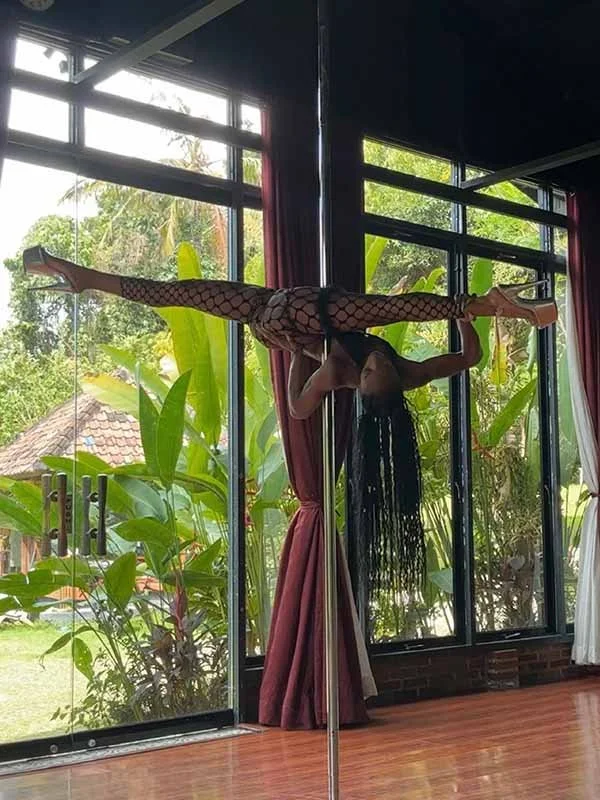
Divine: God, goddesses, divinity... I think a lot of times we as humans, regardless of what you believe spiritually or religiously, we separate ourselves from the divine. Personally, I don't have that belief. I believe that the divine is not only in creation, but it's in everything that comes from creation. That is us. We are divine. That is the plants and the trees and the animals and anything that is born of a creator, I believe, is divine. So, while again Divine is a version of compartmentalizing, it's also at the same time a version of uniting all of the pieces of myself.
Kojo: Would you say divinity is one of the core elements of your work as an artist? Are you a spiritual person?
Divine: I would consider myself a spiritual person. I think before I'd consider myself a spiritual person, I'd consider myself spirit—because I think "person" puts the physical forward, and I put spirit forward. We're existing in these bodies, but this body has a beginning and an end to it. The spirit that I think exists in all of us... I don't think it has a finite beginning and end or a linear timeline.I think that's what makes it divine.
Kojo:. Where are you from—living wise, ethnicity wise ?
Divine: I was born in the Bronx, but I grew up in Connecticut, so very different experiences in my childhood. As for my ethnic background and what I identify with at the forefront, I'm a Black woman all day, every day. My grandma was 100% Cherokee—like, lived on a reservation I identify with my Native culture. Some other things were thrown in there, like Italian and, you know, the other pilgrimages that were led upon our lands.
Kojo: How would you describe that? Growing up in the Bronx and then Connecticut, and then all of your heritage—do you feel like that informs you as an artist?
Divine: Having an existence like Divine is so important for me because it also encompasses the multifaceted being I am. Like I said, I was born in the Bronx—South Bronx—like a block away from the old Yankee Stadium. So this was in the 90s. This was not the gentrified Bronx. This was Southside. I was going to private school in Connecticut while I was living in the Bronx. So that in itself... I felt like Hannah Montana. I was living one life throughout the day, being around a huge amount of wealth, and then taking the little bus back to the Bronx by myself and we're back to reality.
I think that shaped me as a child. I did have the majority of my young adult life in and around Connecticut, minus when I went to college. So I am still very influenced by the area, but also I think it helped me really push who I was. There was a version of me that was lost for a very long time because how do you have all of that going on in your young adulthood and then also have a strong understanding of who you are? You don't. I think all of it came together in a really beautiful way where I'm now strong in who I am and can accept all of the facets of myself.
Kojo: Do you feel like Divine was a path for you to be able to find parts of yourself again, being that you kind of felt a little like a "mystery box"?
Divine: I found myself—well, at least my voice—when I started protesting heavily. That's where I really started because along with the protesting came research about who I am and where I come from and all the questions you have been asking. There were a lot of those things I didn't know, especially when it comes to our Black heritage. I identify as a Black woman, yes, obviously, and the rest of the world identifies me as a Black woman, but in the same breath, how much do I know about the history of Blackness when we're not taught it?
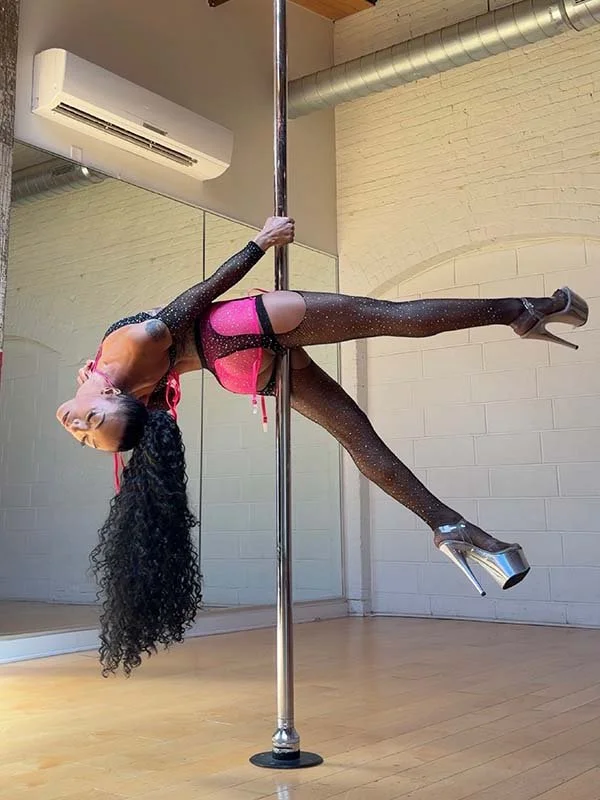
When I started protesting really heavily, that's when I really started to figure out who I was—not just as Kyla, but who I was as a Black woman. That had never come to me before. And I think really falling in love with all of myself came before Divine. Then Divine was a way to hone my creativity into something that was incredibly beneficial for my spirit and my body. Like, I've always been an incredibly creative person, but dance has changed my spirit, my mind, my soul, my body—physically, it has changed me in so many ways that none of my other creative ventures ever have.
Kojo: Do you find that, speaking on just your protest side a little bit, that you have a side of you that's really like "fuck the patriarchy"?
Divine:
“I think I'm "f*ck all the systems."
I don't think there's actually a single system, at least that exists in this country, that I am fully on board for right now. I'm not a man-hater, but also, yes, fuck the patriarchy. I'm not a white-people-hater, but also, fuck the blatant racism. I'm not a total leftist liberal, but also fuck the Republican agenda trying to handle what people do with their own bodies.
Even if you get down to the judicial system, the education system, the medical system, going into all of the research that I was really finding out about what it is to exist as a Black person in this country, it really makes you see—we say the systems are broken, and they're simply not. The systems have been built this way since the very beginning and they have been working since the very beginning.
We have fought and will continue to fight, but the systems are not broken. The systems need to be torn down.
Kojo: What got you into pole dancing? Because from what I'm aware of, you were making a lot of clothes, you were heavy into poetry, and you were also doing a lot of pop-ups with your clothing.
Divine: Totally. I was running my business and I was performing poetry... I started dancing because, honestly, I just needed a change. I believe in everyone having seasons of their lives. In the same way that you go through four seasons in a year, I think you go through several seasons throughout eras of your life. I was in a season of my life where I needed a physical and a mental change.
I had been wanting to dance for a while and I tried some other fitness things first. I started kickboxing for a while. I did a couple of Muay Thai classes, but as soon as I took my first pole class, I was absolutely obsessed. It was just a feeling of freedom, a feeling of sensuality but through strength, a feeling of quite literally just stepping into oneself. There's no way to describe it until you do it. Not everyone’s into pole dancing, obviously, but my thing is pole dancing. It just really clicked. I took one class one week; the second week, I took two classes; and by the third week, I was in four classes a week. I just couldn't stop.
I started it as a very athletic, sporty thing. It very quickly turned into me really stepping into my femininity, my sensuality, my power, and all of that led to me really wanting to do this full-force now.
Kojo: What do you think are misconceptions people have about pole dancing?
Divine: The biggest one has been—well, not that I have had anyone say this straight to my face—but I think from what I see on the platforms that I'm in, a lot of people believe the art of pole is for the beholder and not for the dancer or creator. People think that the dance itself is for performance or is for the club or is for men, if we're being very specific.
When it comes to the people that I know that are really heavy in the space of dance, they don't do it for that. They do it for the love of it. They do it for the strength of it, for the art of it. And we love performance, too—don't get me wrong. I love being on stage. It's one of my favorite things ever. I mean, having a crowd cheer your name is absolutely insane. Doing it with money in your hands, even better. I think a lot of people end up thinking, "Oh, well, this is just for that person to show off," when in reality,
I promise you every person that is dancing around a pole is doing it because they f*cking love it.
Excuse my language.A really big misconception is that we don't include the conversation of pole coming from strippers. I think that's why it ends up being sexualized a lot of times, but as someone who came into it in a fitness area and now is doing it for the love of it, for the art of it and for the dance of it... people don't like to give credit to the fact that this is something that was born by strippers, for strippers. They like to separate, like, "pole sport" from it being in the club. There's this kind of hierarchy in the dance world where there's a little bit of an air about the way that some people go about this dance and really separating themselves from strippers . It's one of those things where, the same way that you couldn't have anything without its creator, right? You can't have pole dance and separate it from it being something that strippers created. I just also want to say that because we are sex-worker-positive over here, and we also give credit where credit is due.
Kojo:. Do you think it will ever be a platform where the art form is purely something that you would see at MoMA or a gallery or an exhibition where people are observing it for those reasons, while also respecting the dancer and not degrading or sexualizing them?
Divine: So unfortunately, currently, the answer is no. I, as someone who exists in both worlds... we don't even respect women after they're assaulted. I would love to be able to say, yes, we could create a world where we both respected the dancer and saw the art in it, and I wish that a perfect world was possible. Unfortunately, I don't think that that's possible. But what I do think is possible is creating spaces and pockets where that is the reality. I think those are places that we can create and things that I want to and will create as well.
Kojo: Okay, so maybe on a more optimistic note... what would be your advice for people getting into pole dancing now? Like, what to do it for, or what to stay clear of?
Divine: Surround yourself with a good environment. For me, that could mean the place that you start dancing, or it could mean the place that your mind starts when you're dancing. What you surround yourself with, what you think about yourself, the way you speak about yourself—everything about your environment is what you end up getting from any form of art.
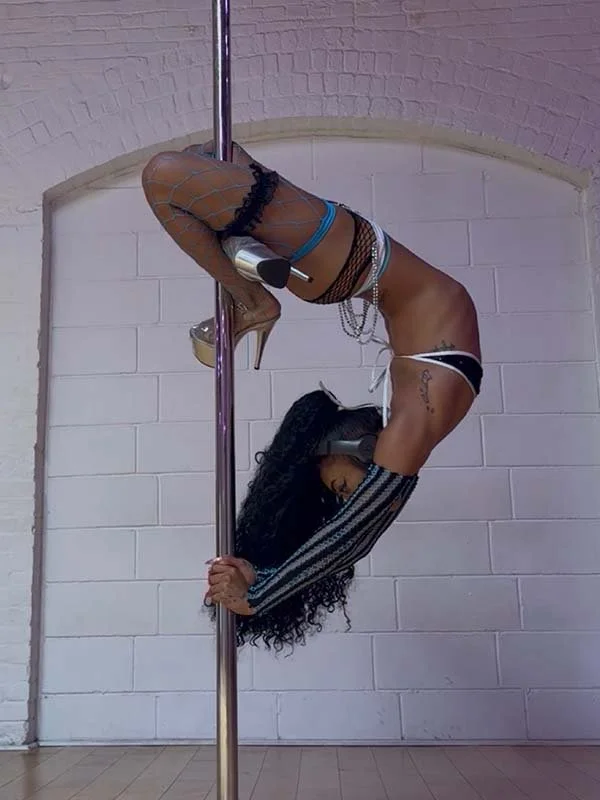
I would say go into dance with an openness to learn and an eagerness to be bad at it at first. Pole dancing is one of those things that no one gets on the first try. You don't. It's not natural for us to be spinning around a metal pole. Nobody gets on the pole the first time and acts like an absolute ballerina. You have to be bad at it first in order to get good. And I think a lot of times people—and their environments—are not good when they start. Whether that's the frame of mind they're in or the studios they start at... when your environment isn't good, you don't feel the pressure to push yourself continually and to actually be bad at it first. But when your environment supports that, you're able to be bad, find the love in it, and then find the strength in it. And now you’ve created a joy in life and a new passion.